Cross-Border Motor Insurance: What the Supreme Court's 2026 Ruling Means
A single line of fine print can decide whether a motor insurance claim is paid or denied. A recent Supreme Court ruling on a cross-border accident shows exactly why reading your policy's exclusions matters.
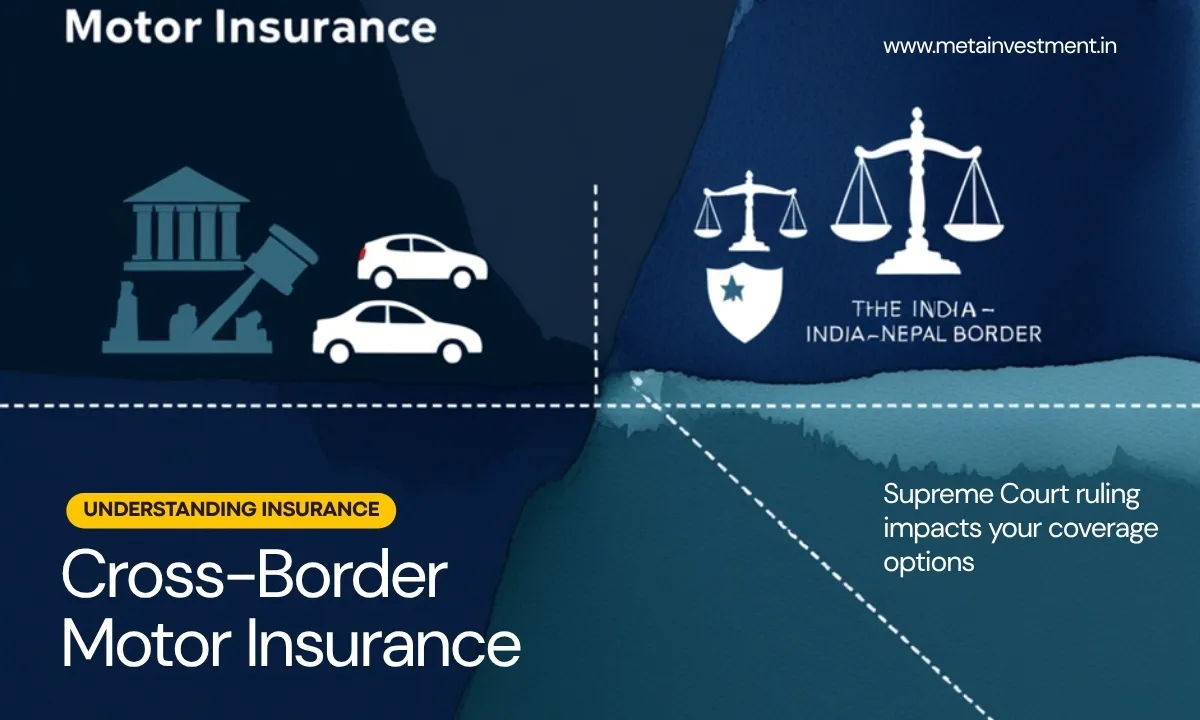
Motor insurance is one of those products most of us buy, renew, and rarely read. We assume that if something goes wrong, the policy will respond. But what happens when the accident occurs just across the border — say, on a pilgrimage or a trade run into Nepal? A July 2026 Supreme Court judgment has thrown useful light on this exact question, and the lessons apply to ordinary vehicle owners and commercial operators alike.
What the Case Was About
The case is Oriental Insurance Co. Ltd. v. Durg Roadways Pvt. Ltd. (Neutral Citation: 2026 INSC 722), decided on July 20, 2026, by a Supreme Court bench of Justices Sanjay Karol and N. Kotiswar Singh.
The facts, in brief:
- A passenger vehicle owned by Durg Roadways set off from Durg (Chhattisgarh) towards Nepal for a religious tour.
- The vehicle had obtained a special permit under the Motor Vehicles Act before the journey.
- On the way, it collided with a hillside in Nepal. Three people, including the driver, died.
- The family of one of the deceased passengers sought compensation before a Motor Accident Claims Tribunal, which awarded roughly ₹32.67 lakh — but directed the vehicle owner to pay.
- On appeal, the Chhattisgarh High Court shifted that liability onto the insurer, Oriental Insurance.
Oriental Insurance then took the matter to the Supreme Court, arguing that the policy simply should not cover an accident that happened outside Indian territory.
Why the Supreme Court Ruled Against the Insurer
The Supreme Court dismissed the insurer's appeal and held it liable to pay the compensation. The reasoning is where the real lesson lies.
No express exclusion. The policy did not contain a clear, specific clause excluding cross-border travel. The insurer wanted the Court to read in such an exclusion after the accident, and the Court declined to do so.
A valid permit. The vehicle had lawfully crossed into Nepal with the required permit under the Motor Vehicles Act, and an India–Nepal arrangement recognised the driver's valid Indian licence for the journey. In other words, the trip itself was legal.
Ambiguity favours the policyholder. The Court applied a long-standing principle of insurance law: where policy wording is ambiguous, it should be interpreted in favour of the insured, not the insurer that drafted it. As reporting on the judgment put it, sloppy drafting of exclusions should not let an insurer escape liability later.
The practical message from the bench was blunt: if an insurer wants to exclude something, it must say so clearly in the contract — not rely on gaps and ambiguity to deny claims after the fact.
The Court's Message to IRDAI
The bench did not stop at deciding the dispute. It went a step further and suggested that the Insurance Regulatory and Development Authority of India (IRDAI) consider issuing a master circular to standardise how cross-border coverage is handled across motor policies.
Specifically, the Court's suggestion was that:
- Any policy that excludes cross-border coverage should state that exclusion explicitly.
- Insurers should inform policyholders upfront that a separate endorsement is needed before international travel.
This matters because cross-border movement into Nepal, Bhutan and Bangladesh is routine for many commercial vehicles and some private travellers, and the current wording of policies can leave both sides guessing.
Important: What Has Actually Changed — and What Hasn't
This is the part worth being very precise about.
The Supreme Court's message to IRDAI is a judicial recommendation, not a regulatory action. As things stand, no new IRDAI rule has been issued, and existing motor policy terms continue to apply exactly as before. Nothing in your policy has automatically changed because of this judgment.
What has changed is the legal backdrop: courts now have a clear Supreme Court precedent that ambiguous or unstated cross-border exclusions will generally be read against the insurer. Whether IRDAI eventually acts on the suggestion and standardises the language is something to watch in the months ahead — but it hasn't happened yet.
What This Could Mean for You
Whether you drive a private car occasionally toward a neighbouring country, or run a fleet of commercial vehicles, the ruling is a useful prompt to understand your own cover rather than assume it.
Here is how a standard policy typically compares with an extended one. (Exact terms vary by insurer and product — this table is illustrative, not a substitute for your own policy schedule.)
| Feature | Standard Motor Policy | With Cross-Border Endorsement |
|---|---|---|
| Geographical area | Usually "India" | Extended to specified neighbouring countries |
| Cover for accidents abroad | Often unclear / disputed | Expressly addressed |
| Additional premium | Not applicable | Usually payable |
| Recorded where | Base policy schedule | Endorsement noted on schedule |
| Certainty at claim stage | Depends on wording | Clearer, subject to terms |
A Practical Checklist Before You Travel Cross-Border
Rather than telling you what to buy, here are points individuals and operators may wish to review for their own circumstances:
- Read the "Geographical Area" and "Limitations as to Use" sections of your policy schedule to see exactly where it applies.
- Look for any express cross-border exclusion or extension — silence is not the same as a clear answer.
- Ask your insurer whether an endorsement is available for your intended destination, vehicle type and permit.
- Confirm the permit and licence requirements for the destination country before you travel; recognition varies.
- Keep documentation of the permit and endorsement with the vehicle during the journey.
The appropriateness of any specific cover depends on your individual needs, the vehicle, the route and the frequency of cross-border use.
Key Takeaways
- The Supreme Court held a motor insurer liable for a Nepal accident because the policy had no express cross-border exclusion and the vehicle carried a valid permit.
- Ambiguity in policy wording will generally be read in the policyholder's favour.
- The Court asked IRDAI to consider a master circular standardising cross-border clauses — but this is a recommendation, not a rule; nothing has changed in insurance regulation yet.
- The everyday lesson is timeless: read your exclusions, and remove uncertainty before you travel rather than after an accident.
Conclusion
Insurance contracts are written in fine print, but they are lived out in real emergencies. This judgment is a reminder that clarity — both from insurers in their drafting and from policyholders in reading their cover — protects everyone. Before your next cross-border journey, a few minutes reviewing your policy, and a conversation with a licensed intermediary, can save a great deal of uncertainty later.
Interested in Investing? Connect with Meta Investment
Meta Investment is a financial product distribution and services firm. If you'd like to explore whether a financial product is the right fit for your portfolio, our team will walk you through the details, help you assess suitability, and guide you through the onboarding process.
It summarises a publicly reported court judgment in plain language; policy terms differ between insurers and products.
Insurance is the subject matter of solicitation. Please read the policy wording, terms, conditions and exclusions carefully before concluding a sale. If you purchase insurance through an intermediary, the intermediary may receive commission from the insurer; such commission should not influence a suitability-based decision.
The suitability of any insurance cover or endorsement depends on an individual's needs, vehicle, travel pattern and overall circumstances. For advice on your specific policy or claim, please consult your insurer or a licensed professional.
Note on regulatory status: The Supreme Court's suggestion that IRDAI consider a master circular on cross-border coverage is a judicial recommendation. As of the date of this article, IRDAI had not issued any such circular, and existing policy terms continue to apply. Verify the current position independently before relying on it.
Frequently Asked Questions
Does my Indian car insurance policy cover accidents in Nepal, Bhutan or Bangladesh?
Not automatically in most cases. A standard Indian motor policy typically defines its geographical area as India. Cross-border cover usually requires a specific 'geographical extension' endorsement, often on payment of additional premium. In the Oriental Insurance v. Durg Roadways case, the Supreme Court held the insurer liable partly because the policy contained no express exclusion for cross-border travel and the vehicle carried a valid permit. You should always check your own policy's geographical area and exclusions rather than assume you are covered.
What did the Supreme Court decide in Oriental Insurance v. Durg Roadways?
On July 20, 2026, a Supreme Court bench of Justices Sanjay Karol and N. Kotiswar Singh upheld the insurer's liability to pay about Rs 32.67 lakh in compensation after a fatal accident in Nepal involving a vehicle insured in India. The Court reasoned that the policy had no express exclusion for cross-border travel, the vehicle had lawfully crossed with a valid permit, and any ambiguity in policy wording must be read in favour of the policyholder, not the insurer.
Why did the insurer lose the case?
The insurer argued the policy should not cover an accident outside Indian territory. The Court rejected this because the policy did not clearly and expressly exclude cross-border coverage, the vehicle had obtained a special permit under the Motor Vehicles Act, and an Indo-Nepal arrangement recognised the Indian driving licence. The Court held that poorly drafted or unclear exclusions cannot be used by an insurer to escape liability after a claim arises.
What is a 'geographical extension' endorsement in motor insurance?
A geographical extension is an add-on that widens where your motor policy applies, for example to neighbouring countries like Nepal, Bhutan or Bangladesh. It is usually added before travel, often for an additional premium, and is recorded on the policy schedule. Without it, or without clear policy wording, cover for accidents abroad can become a matter of dispute.
Has IRDAI changed any insurance rules because of this judgment?
No. The Supreme Court suggested that IRDAI consider issuing a master circular to standardise how cross-border coverage clauses are drafted, but this is a judicial recommendation, not a regulatory action. As of now, no new IRDAI rule has been issued and existing policy terms continue to apply. It is worth watching whether IRDAI acts on the suggestion in future.
What did the Court suggest IRDAI should standardise?
The Court suggested that any policy excluding cross-border coverage should say so explicitly and clearly, and that insurers should be required to inform policyholders upfront that a separate endorsement is needed before international travel. The aim is to reduce ambiguity and disputes for cross-border movement into countries such as Nepal, Bhutan and Bangladesh, which is common for commercial and some private vehicles.
Does a valid Indian driving licence work in Nepal?
In this case, the Court recognised that an arrangement between India and Nepal treated the driver's valid Indian licence as sufficient for the cross-border journey. However, licence recognition varies by country and by the type of vehicle and permit, so you should verify the specific requirements for your destination and vehicle before travelling rather than assume automatic acceptance.
If my policy is silent on cross-border travel, am I automatically covered?
This judgment suggests that ambiguity or silence in policy wording will generally be read in the policyholder's favour, especially where a valid permit exists. However, relying on a court to resolve ambiguity after an accident is risky and slow. The practical takeaway is to remove the uncertainty in advance by checking the policy and obtaining the appropriate endorsement where needed.
What is the difference between a court ruling and an IRDAI circular?
A court ruling decides the specific dispute before it and sets a legal precedent that courts follow. An IRDAI circular is a regulatory instruction that insurers must implement across their products and processes. In this case the Court decided the dispute and recommended that IRDAI consider a circular, but the regulator has not yet issued one, so day-to-day policy terms remain as they are.
Why does this matter for commercial vehicle operators?
Commercial vehicles such as buses and trucks frequently cross into Nepal, Bhutan and Bangladesh for trade, tourism and pilgrimage. Because a single cross-border accident can trigger large compensation claims, operators may wish to confirm that their policies expressly address cross-border use and that any required endorsement is in place before dispatch.
Does this ruling affect health, travel or life insurance policies?
The judgment specifically concerns motor insurance and cross-border accidents. It does not directly change health, travel or life insurance rules. That said, the broader principle, that ambiguous exclusions may be read against the insurer, is a general theme in insurance disputes. For overseas trips, a separate travel insurance policy typically addresses medical and travel-related risks.
What should I check in my own motor insurance policy after this ruling?
You may wish to review the 'Geographical Area' and 'Limitations as to Use' sections of your policy schedule, look for any express exclusion or extension relating to travel outside India, and confirm whether an endorsement is available for your intended cross-border journey. If anything is unclear, seek clarification from your insurer or a licensed insurance intermediary before you travel.
Is this article legal or insurance advice?
No. This article is for educational and informational purposes only. It summarises a public court judgment in plain language. It is not legal advice, insurance advice, or a recommendation to buy or change any policy. Policy terms differ between insurers and products, so you should read your own policy documents and consult a qualified professional for advice on your specific situation.


Mutual fund updates, SIP tips, and what's moving the market. No daily noise — only when there's something worth reading.
Read more about
- Why Young Person Should Take Health Insurance?
- Tips for Buying Electric Car Motor Insurance
- A Comprehensive Guide to Save Tax with Insurance in India
- Group Personal Accident (GPA) @ ₹ 512
- ULIP vs Mutual Funds in India
- De-clutter Your Insurance: Unveiling the Power of eIA in India
- Why a Super Top-Up Plan Can Be Your Healthcare Hero in India?
- World Health Day 2024 - My Health, My Right, My Financial Security
- Why Pawsome Pet Parents Choose Pet Insurance?
- Understanding Surrender Value in Your Insurance Policy
- This Mother's Day, Give the Gift of Security: Invest for Her Future and Protect Her Health
- Kangana Ranaut's Insurance Blooper : A Cautionary Tale in Insurance Buying
- Brewing a Better Future: How Chai Can Teach You About Smart Investments
- Demystifying Annuities: Your Retirement Income Lifeline?
- Ditch the Doctor Drama: Embrace Family Wellness with Even Healthcare
- Meta Investment App Now Available in Google Play Store
- Retirement Planning for Young Indians
- Building Blocks of Wealth: A Guide to Investing for Kids
- Financial Independence for Our Heroes: Investment Strategies for Indian Army Personnel
- World Cancer Day: A Call to Action for Proactive Health and Financial Security
- LIC's Smart Pension Plan: A Comprehensive Review
- Why Critical Illness Insurance is the Missing Piece in Your Health Plan?
- The Importance of Disclosing Existing Life Insurance Policies: Lessons from a Recent Court Ruling
- Tata AIA Shubh Flexi Income Plan: A Comprehensive Guide
- How to Invest Like You Train: Discipline, Consistency, and Growth
- Usain Bolt vs. Eliud Kipchoge: What Runners Can Learn About Trading and Investing
- World Health Day 2025: Why Health Insurance & Financial Planning Matter for Women
- Understanding Beneficial Nominee in Insurance & Its Role in Estate Planning
- Doctor Malpractice Insurance: Why One Lawsuit Can Ruin Your Career
- LIC & NSE Support for Pahalgam Terror Attack Victims | Claim Process & Financial Aid
- HDFC Life Click 2 Achieve – Guaranteed Savings Plan with Life Cover
- The Power of a No-Contest Clause: How Ratan Tata's Will Prevented a Legal Battle
- India Surpasses Japan to Become 4th Largest Economy in 2025 | Growth & Challenges
- The Importance of Insurance in Financial Planning
- Why Travel Insurance is Non-Negotiable – A Critical Lesson from Recent Air Disasters
- From Piggy Bank to Portfolio: A Father’s Day Guide to Building Wealth
- The Importance of Personalized, Transparent Financial Advice in Today’s Digital Age
- ManipalCigna Sarvah Uttam Health Insurance Plan: Comprehensive Coverage with Unique Benefits
- Year-End Review: Mutual Fund Categories & Performance Explained
- Minor Folio in Mutual Funds: Secure Your Child's Financial Future
- SEBI's New Voluntary Lock-in for Mutual Fund Folios: What Every Investor Must Know
- SEBI's New Voluntary Lock-in for Mutual Fund Folios: What Every Investor Must Know
- Form 121: The New TDS Declaration That Replaces Form 15G & 15H
- NRI Mutual Fund KYC in 2026: The Ultimate Compliance Handbook
- NPS Retirement Income Schemes (RIS) & Drawdown Options Explained
- Electronic Gold Receipts (EGR): NSE's New Way to Own Gold Digitally
- RBI's New Conduct Rules for Banks: What Investors Must Know
- EPF Scheme 2026 Explained: New PF Rules, Withdrawals & NPS Comparison
- Senior Citizen Savings Scheme: New Rules from 1 July 2026
- Tata AIA Sampoorna Care – Cancer & Cancer Fund Explained
- FCNR Deposits Explained: A Dollar FD Guide for NRIs
- SEBI Extends SWP/STP Facility to Demat Mutual Fund Units
- SEBI Simplifies Mutual Fund Transmission: What Changes for Nominees and Legal Heirs
- NPS Swasthya Explained: Wait for the Health-Linked Pension, or Buy Health Cover Now?
- US Fed Holds Rates: What It Means for Gold, Silver & the Rupee
- Closing Auction Session: Why Arbitrage Fund NAVs Jumped
- The 8 Freedoms Checklist for Financial Independence
- How to Check an Insurer's Complaint Record Before You Buy
- NPS Swasthya Guidelines 2026: What PFRDA Just Changed
- टाटा एआयए शुभ फ्लेक्सी इनकम प्लॅन: एक सविस्तर मार्गदर्शिका
- तुमच्या प्रशिक्षणाप्रमाणे गुंतवणूक कशी करावी: शिस्त, सातत्य आणि वाढ
- उसेन बोल्ट विरुद्ध एलिउड किपचोगे: धावपटू ट्रेडिंग आणि गुंतवणुकीबद्दल काय शिकू शकतात
- विश्व आरोग्य दिन २०२५: महिलांसाठी आरोग्य विमा आणि आर्थिक नियोजन का महत्त्वाचे आहे
- विमा योजनांमध्ये लाभार्थी नामनिर्देशित व्यक्ती (बेनिफिशियरी नॉमिनी) आणि एस्टेट प्लॅनिंगमधील त्याची भूमिका
- डॉक्टर मालप्रॅक्टिस विमा: एक दावा आपल्या करिअरचा नाश का करू शकतो
- HDFC Life Click 2 Achieve – निश्चित बचत योजना आणि जीवन विमा संरक्षण
- पिगी बँक ते पोर्टफोलिओ: वडिल दिनासाठी संपत्ती निर्मितीची मार्गदर्शिका
- RBI चे बँकांसाठी नवे वर्तन नियम: गुंतवणूकदारांनी काय जाणून घ्यावे
- NPS Swasthya मार्गदर्शक तत्त्वे 2026: PFRDA ने नेमके काय बदलले
Related Posts
- GuideTravel Insurance in India: Coverage, Cost & How to Choose
- GuideMotor Insurance in India: A Complete Guide
 ArticleWhy Travel Insurance is Non-Negotiable – A Critical Lesson from Recent Air Disasters
 ArticleThe Importance of Disclosing Existing Life Insurance Policies: Lessons from a Recent Court Ruling
This communication is intended solely for general educational and informational purposes. The information provided is general in nature and does not take into account the specific financial goals, risk profile, investment horizon, financial circumstances or other requirements of any particular investor. It should not be construed as personalised investment advice or as a recommendation to buy, sell or hold any specific financial product.
Insurance products are regulated by the Insurance Regulatory and Development Authority of India (IRDAI) and are distributed subject to applicable licensing and regulatory requirements. Coverage, waiting periods, exclusions, sub-limits, claim conditions and other terms are governed by the respective policy document. Please read the policy wording and related documents carefully before purchasing an insurance product.
Distributor Disclosure: Where this content is provided by a distributor/intermediary, any applicable commission, remuneration, affiliation or other material conflict of interest shall be disclosed separately. The availability of a product through the distributor does not by itself imply that the product is suitable for every investor.
No Guarantee: No statement on this page should be interpreted as a promise, assurance or guarantee of returns or investment outcomes.
Meta Investment – Your Investment and Insurance Companion