Index Mutual Funds in India: Meaning, Types & Taxation (2026)
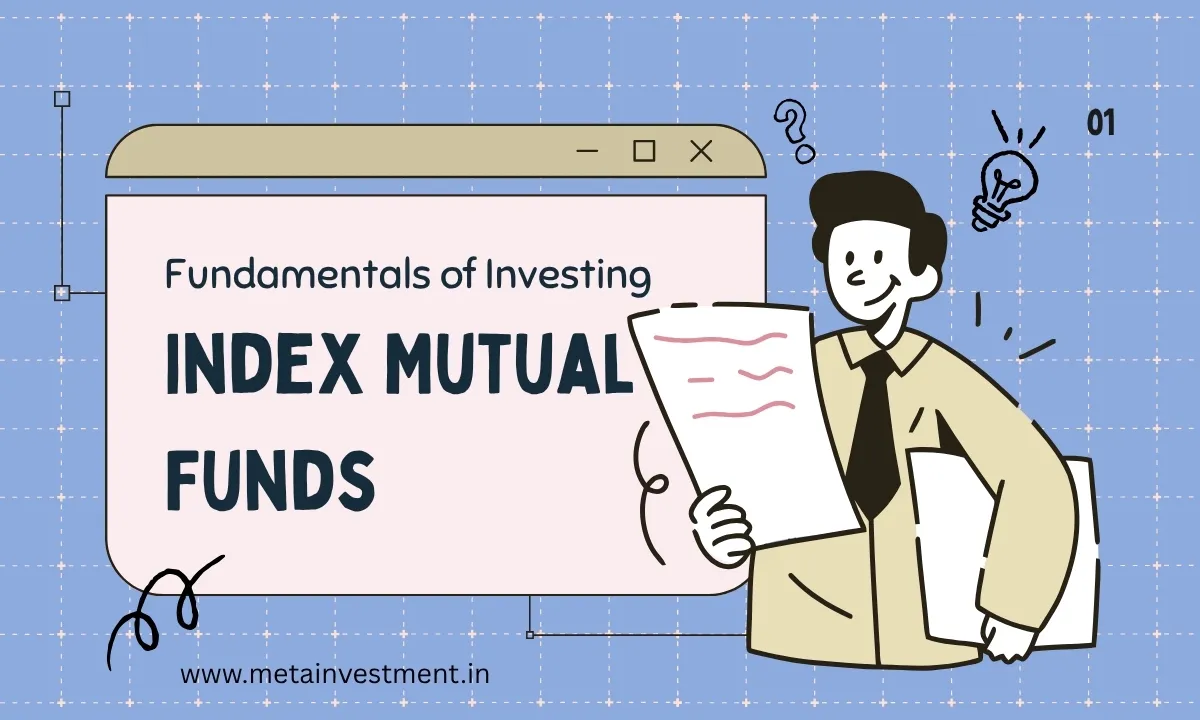
An index mutual fund is a passively managed scheme that simply buys and holds the same stocks, in the same proportions, as a market index like the Nifty 50 or Sensex — instead of paying a fund manager to pick stocks. That passive structure is what keeps costs low (typically 0.10%-0.50% TER on direct plans) while giving investors instant, transparent exposure to India's largest companies through a single SIP.
What Are Index Mutual Funds?
Index Mutual Funds are passive mutual fund schemes that aim to mirror the performance of a specific stock market index—such as the Nifty 50 or Sensex—by investing in the same securities and maintaining similar weightage as the index itself. This strategy provides investors with broad market exposure and instant diversification, allowing participation in the growth of India's largest companies without active stock picking or frequent rebalancing.
How Do Index Funds Work?
Instead of chasing market-beating returns through constant buying and selling, index funds systematically invest in all components of an underlying index. The fund manager's role is to match the portfolio to the index—making adjustments only when the index itself changes (rebalancing, additions, or removals). This means lower expenses, reduced management risk, and performance closely linked to the overall market, subject to tracking error.
Index Funds vs. Actively Managed Funds
| Factor | Index Funds | Actively Managed Funds |
|---|---|---|
| Management Style | Passive — replicates an index | Active — fund manager picks stocks |
| Goal | Match the index's return | Beat the index's return |
| Typical Expense Ratio (Direct) | ~0.10%-0.50% | ~0.5%-1.5% |
| Manager Risk | None — no stock-picking decisions | Present — returns depend on manager skill |
| Transparency | Full — holdings mirror a public index | Moderate — holdings disclosed monthly |
| Best Suited For | Low-cost, hands-off long-term investors | Investors seeking potential outperformance |
Key Benefits of Index Mutual Funds
- Low Expense Ratio: Thanks to passive management, index funds usually have lower fees than actively managed funds — see our Total Expense Ratio guide for how TER affects your returns.
- Diversification: Instant access to a wide set of stocks across sectors and market caps, reducing stock-specific risk.
- Transparency: Portfolio precisely reflects the tracked index, making holdings easy to understand and monitor.
- Long-Term Wealth Creation: Ideal for investors seeking consistent returns aligned with the market's long-term growth.
- Easy SIP Options: Most index funds offer SIP (Systematic Investment Plan), allowing investors to build wealth regularly and systematically.
Types of Index Mutual Funds in India
- Broad-Based Index Funds: Track major indices like Nifty 50, Sensex, Nifty 100, or Nifty 500.
- Sectoral Index Funds: Focus on segments such as banking (Nifty Bank), technology, or healthcare.
- Strategy (Smart Beta) Index Funds: Follow specialized indices based on factors like value, momentum, or quality.
- International Index Funds: Track global indices such as the Nasdaq 100 or S&P 500, offering geographic diversification beyond Indian markets.
- Debt Index Funds: Track fixed-income indices (e.g., government securities or corporate bond indices) rather than equities, for investors seeking lower-volatility passive exposure.
Expense Ratio and Tracking Error — What to Compare
When two index funds track the same benchmark, the differentiator is cost and precision, not stock selection:
- Expense Ratio (TER): Direct plans typically run 0.10%-0.50%, versus up to ~1% for regular plans of the same fund, since regular plans build in distributor commission. Read our full Total Expense Ratio (TER) guide for how this is calculated and regulated.
- Tracking Error: The gap between the fund's return and the index's return, caused by expenses, cash drag, and rebalancing timing. A consistently low tracking error indicates a well-run index fund.
Taxation on Index Mutual Funds (FY2026-27)
Equity-oriented index funds (investing at least 65% in Indian equities, such as Nifty 50 or Sensex index funds) are taxed the same as other equity mutual funds:
- Short-Term Capital Gains (STCG): Units held for less than one year are taxed at 20%.
- Long-Term Capital Gains (LTCG): Units held for more than one year are taxed at 12.5% on gains above ₹1.25 lakh per financial year. Indexation benefit is not available.
Debt-oriented or international index funds (which don't meet the 65% domestic-equity threshold, such as an S&P 500 or Nasdaq 100 index fund) are taxed at your applicable income tax slab rate regardless of the holding period.
Who Should Consider Index Funds?
- Those seeking a hassle-free, low-cost way to participate in India's equity markets.
- Investors with long-term financial goals who want stable, market-linked returns.
- Individuals looking to start their investment journey via SIP in a diversified, transparent product.
- Portfolio builders aiming for broad-market diversification with minimal management risk.
The CFP Perspective
As a SEBI-regulated, AMFI-registered MFD and CFP, we position index funds as the low-cost "core" of a well-built portfolio — a way to capture broad market growth reliably, without depending on any one fund manager's calls. For many long-term goals, a Nifty 50 or Sensex index fund SIP is a sound starting point; investors seeking potential outperformance, sector tilts, or active risk management can consider actively managed or focused funds alongside it. The right mix depends on your goals, timeline, and risk appetite.
Get Started with Index Mutual Funds
Meta Investment can help you understand how Index Mutual Funds fit into a regular SIP investing strategy, based on your financial goals and risk profile. Contact us to learn how Index Funds can be incorporated into your overall financial planning strategy.
Also see: What is SIP? Benefits & How It Works | Equity Mutual Funds — Types & SEBI Categories | ELSS Tax-Saving Funds | Mutual Fund Types Guide
Frequently Asked Questions
What is an index mutual fund?
An index mutual fund is a passive investment scheme that replicates the composition and performance of a specific stock market index, such as the Nifty 50 or Sensex, by holding the same securities in the same proportions as the index. For example, a Nifty 50 index fund holds all 50 companies in the index in the exact weights the index assigns them, so its returns closely track the index before expenses and tracking error.
How are index funds different from actively managed funds?
Index funds are passively managed and simply aim to match the returns of their underlying index, while actively managed funds rely on a fund manager's research and stock selection to try to beat the market. This difference in effort shows up in cost: index funds typically charge a Total Expense Ratio (TER) of around 0.10%-0.50% on direct plans, compared to roughly 0.5%-2.25% for actively managed equity funds — a gap that compounds meaningfully over long holding periods.
What is tracking error and why does it matter for index funds?
Tracking error measures how much an index fund's returns deviate from its benchmark index over time, caused by factors like the fund's expense ratio, cash held for redemptions, and the timing of portfolio rebalancing. A lower tracking error means the fund is doing its one job well — mirroring the index — so it's a key metric to compare when choosing between index funds tracking the same benchmark.
What is the difference between an index fund and an index ETF?
Both track the same index and hold similar portfolios, but they are bought differently. An index mutual fund is purchased directly from the AMC (including via SIP) at the day's NAV, with no demat account needed. An index ETF (Exchange Traded Fund) trades on the stock exchange like a share, so it needs a demat and trading account, and its price can vary slightly through the day due to market demand rather than being fixed once daily like NAV.
Should I choose a direct or regular plan for an index fund?
Direct plans have no distributor commission built into the expense ratio, so they carry a lower TER and deliver marginally higher returns than regular plans of the same index fund over time. Since index funds require no ongoing fund-manager decisions to evaluate, many investors default to direct plans — though a regular plan through an advisor can still be worthwhile if you value ongoing planning guidance and portfolio review.
What are the main benefits of investing in index mutual funds?
The key benefits are lower expense ratios than active funds, instant diversification across an entire index in a single investment, full portfolio transparency since holdings mirror a public index, and no fund-manager selection risk — returns are designed to track the market rather than depend on one manager's calls.
How can I start investing in an index fund in India?
You can start by selecting an index fund from a trusted mutual fund distributor or investment platform, completing KYC, and setting up either a lump sum investment or a monthly SIP (Systematic Investment Plan) — many index fund SIPs can be started with as little as ₹100-₹500 per month.
Are index mutual funds suitable for long-term wealth creation?
Yes. Because index funds hold a broad, diversified basket of stocks and charge low ongoing costs, they are well suited to long-term SIP investing (typically 7-10+ years for equity index funds), where market-linked compounding and lower fee drag both work in the investor's favour.
What risks should I be aware of when investing in index mutual funds?
Index funds reduce stock-specific risk through diversification, but they remain fully exposed to overall market risk — if the index falls, the fund falls with it, with no fund manager able to move to cash or defensive stocks. They also cannot outperform their benchmark; at best they will match it minus tracking error and expenses, so they are not a tool for beating the market.
How is taxation handled for index mutual funds in India?
Equity-oriented index funds (funds investing at least 65% in Indian equities, such as Nifty 50 or Sensex index funds) follow standard equity taxation for FY2026-27: Short-Term Capital Gains (units held under 1 year) are taxed at 20%, and Long-Term Capital Gains (units held over 1 year) are taxed at 12.5% on gains above ₹1.25 lakh per financial year, with no indexation benefit. Debt-oriented or international index funds are taxed at your income slab rate regardless of holding period, per the rules introduced from April 2023.
Read more about
 GuideMutual Funds in India 2026: Types, SIP Returns & Guide
 GuideMutual Fund Categorization and Types of Schemes: A Comprehensive Guide
- GuideBeginner’s Guide to Mutual Funds in India – How to Start Investing in 2026
 GuideGold and Silver ETFs & Index Mutual Funds in India - Benefits, Risks & How to Invest
  GuideFocused Mutual Fund: Concentrated Investing for Potential Growth
 GuideHybrid Mutual Fund
- GuideISIN
 GuideWhat is SIP in Mutual Funds? Benefits, How It Works (2026).
Mutual Funds Insights
 GuideCan a 10-Year SIP Lose Money? What the Index Data ShowsMutual Funds
 GuideGold FoF Pause: What It Means for Your Gold SIPMutual Funds
 GuideGot a Bonus? Jio IPO or SIP: A Simple Decision FrameworkMutual Funds
Related Posts



This communication is intended solely for general educational and informational purposes. The information provided is general in nature and does not take into account the specific financial goals, risk profile, investment horizon, financial circumstances or other requirements of any particular investor. It should not be construed as personalised investment advice or as a recommendation to buy, sell or hold any specific financial product.
Mutual Fund investments are subject to market risks. Please read all scheme-related documents carefully before investing. Past performance is not indicative of future results and may not be sustained.
The suitability of any mutual fund product, scheme, category or strategy discussed on this page depends on an investor's individual circumstances, including financial goals, risk appetite, investment horizon and liquidity requirements. Investors should independently assess suitability and, where appropriate, seek professional advice before making investment decisions.
Meta Investment is an AMFI-registered Mutual Fund Distributor (ARN-129322) and is not a SEBI-registered Investment Adviser. If investments are made through a mutual fund distributor, the distributor may receive commission from Asset Management Companies in respect of eligible Regular Plan investments. Commission structures may vary across schemes and AMCs. Such commissions should not influence suitability-based recommendations, and applicable conflicts of interest will be disclosed. Please refer to our Commission Disclosure for further details.
Tax treatment of mutual fund investments depends on individual circumstances and prevailing tax laws, which are subject to change. Investors should consult a qualified tax professional for advice specific to their circumstances.
This disclaimer is intended to provide general disclosure and does not replace any scheme-specific disclosures, risk factors, regulatory disclosures or information contained in the applicable Scheme Information Document (SID), Statement of Additional Information (SAI) and Key Information Memorandum (KIM).
Distributor Disclosure: Where this content is provided by a distributor/intermediary, any applicable commission, remuneration, affiliation or other material conflict of interest shall be disclosed separately. The availability of a product through the distributor does not by itself imply that the product is suitable for every investor.
No Guarantee: No statement on this page should be interpreted as a promise, assurance or guarantee of returns or investment outcomes.
Meta Investment – Your Investment and Insurance Companion
Mutual fund updates, SIP tips, and what's moving the market. No daily noise — only when there's something worth reading.