Invest
Mutual Fund
PMS
SIF
Alternatives
Fixed Income
Protect & Plan
Insurance
NPS
Retirement
Tools
Artha Auto-Plan
Calculators
Risk Profiler
Money Moves
Paisa Lingo
Free Guides
NRI
NRI Overview
US & Canada NRIs
Repatriation Planner
TDS Estimator
SIP Projection Tool
Residency Status Checker
Route Finder
About
About
Insights
Contact
Book a call
→
Log in
+91-9309806281
info@metainvestment.in
EN
|
मराठी
Meta Investment
Your Investment and Insurance Companion
Invest
Mutual Fund
PMS
SIF
Alternatives
Fixed Income
Protect & Plan
Insurance
NPS
Retirement
Tools
Artha Auto-Plan
Calculators
Risk Profiler
Money Moves
Paisa Lingo
Free Guides
NRI
NRI Overview
US & Canada NRIs
Repatriation Planner
TDS Estimator
SIP Projection Tool
Residency Status Checker
Route Finder
About
About
Insights
Contact
Log in
Book a call
→
Home
›
Topics
›
RBI & Monetary Policy
RBI & Monetary Policy
RBI policy decisions, repo rate changes and their impact on investors.
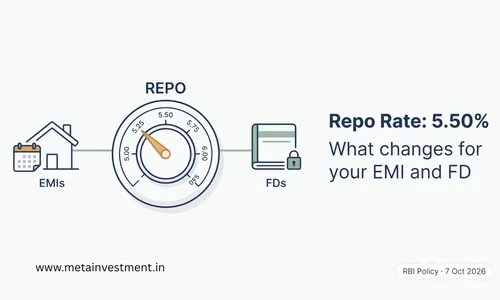
RBI's MPC raised the repo rate by 25 bps to 5.50% on October 7, 2026 and shifted to calibrated tightening. What changes for home loan borrowers, FD depositors and debt fund investors.
The US Fed raised rates to 3.75%–4% on 16 Sep 2026. An educational look at how a Fed rate hike reaches Indian mutual fund and SIP investors — rupee, FPI flows and bond yields.
The US Fed held rates at 3.50%-3.75% in July 2026 with a divided 9-3 vote. Here is a plain-language explainer on what it means for gold, silver, USD-INR and Indian investors.
RBI's 2026 amendment directions target compulsory bundling, dark patterns, and mis-selling in how banks sell mutual funds, insurance, and loans. Here's what changes from January 2027 and how it affects you.
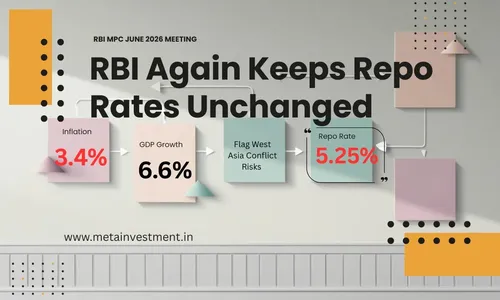
RBI MPC kept the repo rate unchanged at 5.25% in June 2026 amid geopolitical risks and rising inflation. Here's what Indian investors and borrowers need to know.
The RBI maintains a 5.25% repo rate in February 2026. Discover how the new CPI series, increased MSME loan limits, and fraud compensation affect your personal finances.
Discover the origin of World Savings Day, explore India’s savings patterns based on RBI data, and understand the critical benefits of saving for financial security and economic growth.
Wondering what the latest RBI policy means for your money? We break down the key announcements on interest rates, inflation, and new rules for investors in simple, easy-to-understand terms.
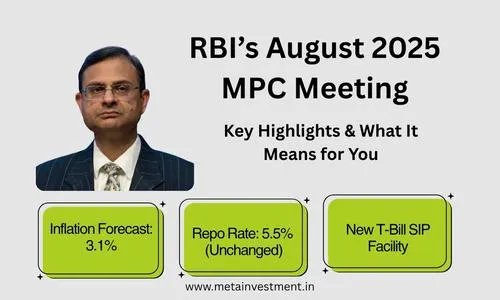
RBI’s August 2025 MPC meeting kept the repo rate unchanged at 5.5%, forecasts lower inflation, and introduces a new SIP for Treasury Bills. Find out how this impacts your loans, savings, and investments.
RBI surprises with a 50 bps repo rate cut & 100 bps CRR reduction but shifts stance to neutral. What it means for loans, bonds & the economy.
Last chance to lock-in high interest rates
← Browse All Topics
All Blog Posts