MPC Cuts Repo Rate by 50 bps & CRR by 100 bps: RBI Shifts to Neutral Stance
MPC Delivers Surprise 50 bps Rate Cut and 100 bps CRR Reduction: Key Takeaways
The Monetary Policy Committee (MPC) sprung a major surprise today by announcing a 50 basis points (bps) repo rate cut, against market expectations of a 25 bps reduction.
Additionally, the Reserve Bank of India (RBI) Governor revealed a 100 bps cut in the Cash Reserve Ratio (CRR), to be implemented in phases over four fortnights starting September.

This bold move signals the RBI’s commitment to boosting economic growth amid global uncertainties while ensuring smooth transmission of lower rates across the financial system. However, the unexpected shift in stance from 'accommodative' to 'neutral' has left markets puzzled.
Key Highlights from Today’s MPC Decision
1. Aggressive Rate Cut and Liquidity Injection
- Repo rate cut by 50 bps, bringing it down to 5.5% (against consensus expectations of 25 bps).
- CRR reduced by 100 bps (phased over September-December), injecting ₹2.5 lakh crore into the banking system.
- CPI inflation projection revised downward to 3.7% for the year, providing room for monetary easing.
2. Surprise Shift to Neutral Stance
Despite the rate cut, the MPC changed its stance from 'accommodative' to 'neutral', indicating limited room for further easing. The Governor clarified that future actions will be data-dependent, suggesting a cautious approach ahead.
3. Focus on Transmission of Rate Cuts
The RBI has been consistently flooding the system with liquidity (over ₹6 lakh crore post-dividend transfer) to ensure banks pass on rate cuts effectively. Today’s measures—front-loaded rate cut and pre-committed CRR reduction—aim to remove any hurdles in transmission.
Market Reaction: Curve Steepening and Rate Cut Expectations Fading
The immediate market response was aggressive steepening of the yield curve, reflecting:
- Expectation that the rate-cutting cycle is near its end (terminal rate seen at 5.5%).
- Reduced hopes for further Open Market Operation (OMO) purchases, given the CRR cut.
- Shift in investor preference to short-term bonds (up to 5 years) as long-duration demand weakens.
Why the Neutral Stance May Be Premature
While the RBI’s liquidity measures are commendable, the sudden shift to a neutral stance raises concerns:
- Limits the 'expectation channel' of monetary policy—markets may now price out future cuts prematurely.
- Global uncertainties persist, with risks of slower growth and potential need for further easing.
- An accommodative stance would have been more appropriate, given the uncertain economic outlook.
Impact on Fixed Income Investments
The surprise 50 bps rate cut and CRR reduction will have significant implications for fixed income investors:
- Short-term bond yields may decline further, making liquid funds, ultra-short duration funds, and money market instruments attractive for conservative investors.
- Long-term bonds could see volatility due to the RBI’s shift to a neutral stance, which signals limited room for further rate cuts.
- Corporate bond spreads may tighten as improved liquidity eases borrowing costs for companies, benefiting corporate bond funds.
- FD rates likely to drop soon—investors in fixed deposits should consider locking in higher rates before banks adjust their offerings.
For investors, a barbell strategy—mixing short-term and high-quality long-term debt—may be optimal amid evolving monetary policy conditions.
Invest in Edel Finance's GEM Series to Lock in Higher Yields
One of the best ways to capitalize on the current high-interest-rate environment is by investing in Edel Finance'S A+, Senior Secured & Listed GEM NCD (GEM Series).
Key Features:
- Investment Tenures & IRR:
- 24 Months: 9.75%
- 30 Months: 10%
- 36 Months: 10%
- Three-Tier Security Structure:
- Backed by the issuing company’s balance sheet assets.
- Corporate Guarantee from a listed company.
- Charge on Edelweiss MF shares for additional security.
Contact Meta Investment to know more.
What Lies Ahead for Markets and Economy?
Despite initial market jitters, India’s strong macroeconomic fundamentals should support stability:
- Fiscal credibility remains intact, with conservative government spending.
- Global dollar weakness and falling US yields could reignite foreign bond inflows into India.
- Liquidity measures may not immediately spur credit growth, given subdued private capex and saturated retail credit segments.
Bottom Line
The RBI’s bold 50 bps rate cut and CRR reduction underscore its proactive approach to support growth and ensure rate transmission. However, the neutral stance shift introduces uncertainty, potentially dampening market expectations.
For investors, short-term bonds may offer better value in the near term, while long-duration demand could revive if global conditions soften further. The RBI’s next moves will hinge on incoming data and global developments, making this a critical phase for monetary policy.


Mutual fund updates, SIP tips, and what's moving the market. No daily noise — only when there's something worth reading.
Read more about
- Berar Aug'22 Bond's
- Rupeek Bonds
- Investing for Building Wealth: What Cricket Can Teach Us
- 10.4% EDELWEISS FINANCIAL SERVICES Secured NCD Open for subscription
- 10.75% NIDO Home Finance NCD
- 11.19% Navi Finserve NCD Public Issue
- Calling All Investors: Two New NCDs Hit the Market!
- Anchoring Your Portfolio: Why Fixed Income Products Deserve a Place in Your Investment Journey
- 10.75% NIDO Home Finance NCD
- Demystifying Bond Yields and Coupons
- Private Credit: Loans Beyond the Bank
- 11% EDELWEISS FINANCIAL SERVICES Secured NCD Open for subscription
- 10.10% MUTHOOT FINCORP NCD Open for Subscription
- ₹800 crore Adani NCD Opens for Subscription: Is it the Right Investment for You?
- 10.75% Sammaan Capital Ltd NCD Open for Subscription
- 11.00% NIDO Home Finance NCD
- 11% Edelweiss Financial Services NCD Opens for Subscription
- Navigating The Current Equity Market Correction
- Two Great Fixed-Income Investment Opportunities to Lock in High Returns
- RBI Cuts Repo Rate for the First Time in 5 Years
- Unlock High Returns with Sammaan Capital Limited’s Secured NCDs – Tranche III Public Issue Now Open!
- Nido Home Finance Limited NCD: A Secure Investment Opportunity
- Edelweiss NCDs 2025 – Secure 9.5% to 11% Returns | Best Fixed-Income Investment
- Edelweiss Gold Structured Products: A Smart Way to Invest in Gold with Principal Protection
- Muthoot Tranche V NCD Public Issue: A High-Yield Fixed Income Opportunity
- Nido Home Finance NCD 2025: Secure 10.75% Returns | CRISIL A+ Rated Investment
- Adani Enterprises NCDs 2025 – Safe Investment with 9.3% Returns?
- RBI’s August 2025 MPC Meeting: Key Highlights & What It Means for You
- ESAF SFB NCD Issue: 11.30% Coupon | Basel II Compliant Bonds
- Begin Your Wealth Journey This Ganesh Chaturthi: Ganpati-Inspired Mutual Fund Lessons
- RBI Holds Rates Steady: What the October 2025 Policy Means for Your Wallet and Investments
- Diwali Investment 2025: Brighten Your Financial Future with Indel Money Secured NCD | High Yield Fixed Income for Pune Investors
- Light Up Your Finances This Diwali: A Guide to Wealth, Wisdom, and Long-Term Prosperity
- Adani Enterprises NCD 2026: 8.9% Yield, Secure Options for Retail Investors | Apply Now
- PFC NCD Issue Jan 2026: AAA Rated Bonds Offering up to 7.30%
- RBI MPC June 2026: Repo Rate Held at 5.25% — What It Means for You
- RBI's New Conduct Rules for Banks: What Investors Must Know
- SEBI Credit Risk-o-Meter: What the Bond Colours Mean
- निदो होम फायनान्स लिमिटेड एनसीडी: एक सुरक्षित गुंतवणूकीची संधी
- एडलवाइस NCD 2025 – 9.5% ते 11% सुरक्षित परतावा | सर्वोत्तम निश्चित उत्पन्न गुंतवणूक
- एडलवाईस गोल्ड स्ट्रक्चर्ड प्रॉडक्ट्स: मुद्दल सुरक्षित ठेवून सोन्यात गुंतवणूक करण्याचा हुशार मार्ग
- मुथूट ट्रान्शे V एनसीडी पब्लिक इश्यू: उच्च-परतावा देणारी स्थिर उत्पन्नाची संधी
- MPC ने रेपो रेटमध्ये 50 bps आणि CRR मध्ये 100 bps कपात केली; RBI चा स्टान्स 'न्यूट्रल' वर
- RBI चा ऑगस्ट 2025 MPC बैठक: प्रमुख हायलाइट्स आणि तुमच्यासाठी काय अर्थ आहे
- RBI चे बँकांसाठी नवे वर्तन नियम: गुंतवणूकदारांनी काय जाणून घ्यावे
- SEBI Credit Risk-o-Meter: बाँडच्या रंगांचा अर्थ काय?
Related Posts
 ArticleRBI Cuts Repo Rate for the First Time in 5 Years
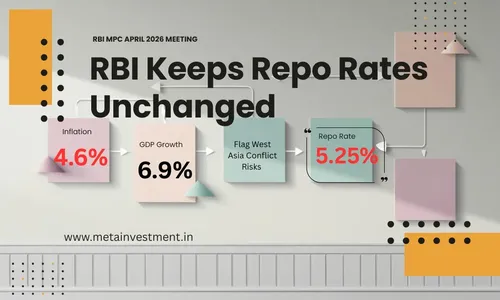 ArticleRBI MPC April 2026: Repo Rate Held, What It Means for Your Investments
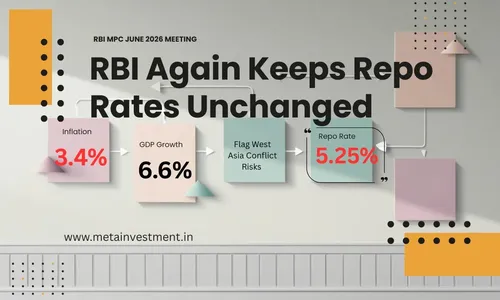 ArticleRBI MPC June 2026: Repo Rate Held at 5.25% — What It Means for You
 ArticleRBI Holds Rates Steady: What the October 2025 Policy Means for Your Wallet and Investments
This communication is intended solely for general educational and informational purposes. The information provided is general in nature and does not take into account the specific financial goals, risk profile, investment horizon, financial circumstances or other requirements of any particular investor. It should not be construed as personalised investment advice or as a recommendation to buy, sell or hold any specific financial product.
Fixed-income instruments such as Fixed Deposits, Bonds and NCDs carry credit/default, interest-rate, liquidity, reinvestment and issuer-specific risks; bank FDs and corporate instruments have different risk characteristics.
Distributor Disclosure: Where this content is provided by a distributor/intermediary, any applicable commission, remuneration, affiliation or other material conflict of interest shall be disclosed separately. The availability of a product through the distributor does not by itself imply that the product is suitable for every investor.
No Guarantee: No statement on this page should be interpreted as a promise, assurance or guarantee of returns or investment outcomes.
Meta Investment – Your Investment and Insurance Companion