RBI Cuts Repo Rate for the First Time in 5 Years
The Reserve Bank of India (RBI) has made a significant move by cutting the repo rate by 25 basis points (bps) to 6.25%, marking the first reduction in five years. For investors, especially those in the fixed-income space, this presents a unique opportunity to reassess their portfolios and capitalize on the changing interest rate environment.
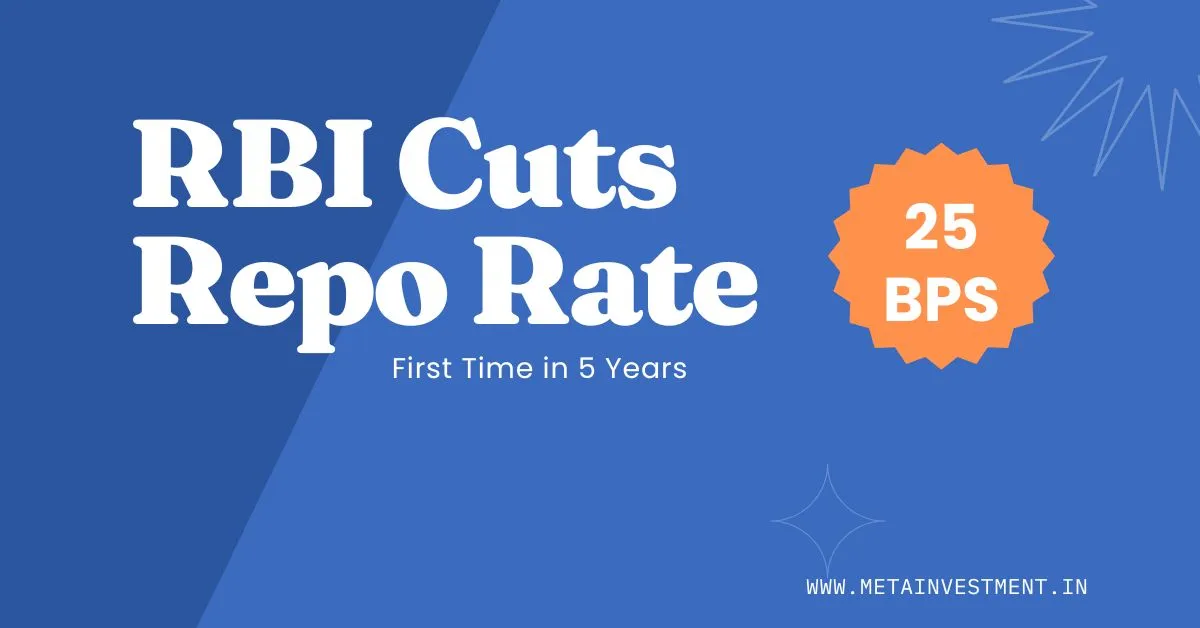
The Monetary Policy Committee (MPC) deciding on interest rates also agreed to keep their current approach (neutral stance) and continue to focus clearly on keeping inflation in line with the target, while also trying to help the economy grow.
What Does the Repo Rate Cut Mean?
The repo rate is the rate at which the RBI lends to commercial banks. A reduction in this rate means banks can borrow funds at a lower cost, which typically translates to lower interest rates on loans for consumers and businesses. Over time, this move is expected to stimulate economic activity by making credit more affordable.
Implications for Investors
1. Lower Loan Interest Rates
With the repo rate cut, banks are likely to reduce their prime lending rates, leading to lower EMIs on home loans, auto loans, and business loans. This is excellent news for borrowers, as it reduces the cost of debt and improves disposable income. For investors, this could mean more liquidity to allocate toward investments.
2. Falling Deposit Rates
While borrowers benefit, savers may face a downside. As lending rates decline, banks are also expected to lower interest rates on fixed deposits (FDs) and other savings instruments. If you've been relying on traditional FDs for steady returns, it's time to rethink your strategy. The era of high FD rates may be coming to an end, at least for the foreseeable future.
3. A Golden Opportunity for Fixed-Income Investors
The RBI's rate cut is a clear signal that interest rates are likely to trend downward in the coming months. For fixed-income investors, this is a critical window to lock in higher yields before rates decline further. Here's how you can make the most of this opportunity:
- Invest in Long-Term Debt Instruments: Consider locking in higher interest rates by investing in long-term fixed-income products such as bonds, non-convertible debentures (NCDs), or fixed maturity plans (FMPs). These instruments can provide attractive returns over a longer horizon, especially when rates are expected to fall.
- Explore High-Yield Corporate Bonds: With interest rates on government securities likely to decline, high-rated corporate bonds can offer better yields. Ensure you assess the credit risk before investing.
- Revisit Your Debt Mutual Funds: If you're invested in debt mutual funds, this is a good time to evaluate your portfolio. Funds with longer durations may benefit from falling interest rates, as bond prices tend to rise when yields fall.
What Should You Do Next?
The RBI's rate cut is a reminder that the interest rate cycle is turning. For fixed-income investors, the key is to act swiftly and strategically. Here are a few steps to consider:
- Lock in High Rates: If you've been considering fixed-income investments, now is the time to act. Secure higher yields before rates drop further.
- Diversify Your Portfolio: Don't put all your eggs in one basket. Explore a mix of debt instruments, including bonds, FDs, and debt mutual funds, to balance risk and returns.
- Consult a Wealth Manager: The current environment presents both opportunities and challenges. A wealth manager can help you navigate the complexities and tailor a strategy that aligns with your financial goals.
Check Current Fixed-Income Investment Opportunities.
Conclusion
The RBI's decision to cut the repo rate is a significant development with far-reaching implications for investors. While borrowers stand to benefit from lower loan rates, fixed-income investors must act decisively to secure higher yields before rates decline further. By locking in attractive returns now and diversifying your portfolio, you can make the most of this pivotal moment in the interest rate cycle.
Stay informed, stay proactive, and seize the opportunity to strengthen your financial future.
Please consult a certified wealth manager or financial advisor before making any investment decisions.


Mutual fund updates, SIP tips, and what's moving the market. No daily noise — only when there's something worth reading.
Read more about
- Better returns with Bonds
- Berar Aug'22 Bond's
- Rupeek Bonds
- Investing for Building Wealth: What Cricket Can Teach Us
- 10.4% EDELWEISS FINANCIAL SERVICES Secured NCD Open for subscription
- 10.75% NIDO Home Finance NCD
- 11.19% Navi Finserve NCD Public Issue
- Calling All Investors: Two New NCDs Hit the Market!
- Earn More Than Traditional Fixed Income with Market-Linked Debentures
- Anchoring Your Portfolio: Why Fixed Income Products Deserve a Place in Your Investment Journey
- Peer-to-Peer Lending: A New Era for Indian Investors?
- 10.75% NIDO Home Finance NCD
- Considering a positive outlook for TCS or Titan? These new MLDs might be for you!
- Demystifying Bond Yields and Coupons
- 11% EDELWEISS FINANCIAL SERVICES Secured NCD Open for subscription
- 10.10% MUTHOOT FINCORP NCD Open for Subscription
- ₹800 crore Adani NCD Opens for Subscription: Is it the Right Investment for You?
- 10.75% Sammaan Capital Ltd NCD Open for Subscription
- 11.00% NIDO Home Finance NCD
- 11% Edelweiss Financial Services NCD Opens for Subscription
- Navigating The Current Equity Market Correction
- Two Great Fixed-Income Investment Opportunities to Lock in High Returns
- Unlock High Returns with Sammaan Capital Limited’s Secured NCDs – Tranche III Public Issue Now Open!
- Nido Home Finance Limited NCD: A Secure Investment Opportunity
- Edelweiss NCDs 2025 – Secure 9.5% to 11% Returns | Best Fixed-Income Investment
- Edelweiss Gold Structured Products: A Smart Way to Invest in Gold with Principal Protection
- Muthoot Tranche V NCD Public Issue: A High-Yield Fixed Income Opportunity
- MPC Cuts Repo Rate by 50 bps & CRR by 100 bps: RBI Shifts to Neutral Stance
- Nido Home Finance NCD 2025: Secure 10.75% Returns | CRISIL A+ Rated Investment
- Adani Enterprises NCDs 2025 – Safe Investment with 9.3% Returns?
- RBI’s August 2025 MPC Meeting: Key Highlights & What It Means for You
- All Weather Gold: A Principal-Protected Way to Bet on Gold (Until Aug 31)
- ESAF SFB NCD Issue: 11.30% Coupon | Basel II Compliant Bonds
- Begin Your Wealth Journey This Ganesh Chaturthi: Ganpati-Inspired Mutual Fund Lessons
- RBI Holds Rates Steady: What the October 2025 Policy Means for Your Wallet and Investments
- Diwali Investment 2025: Brighten Your Financial Future with Indel Money Secured NCD | High Yield Fixed Income for Pune Investors
- Light Up Your Finances This Diwali: A Guide to Wealth, Wisdom, and Long-Term Prosperity
- Adani Enterprises NCD 2026: 8.9% Yield, Secure Options for Retail Investors | Apply Now
- PFC NCD Issue Jan 2026: AAA Rated Bonds Offering up to 7.30%
- SEBI Debt Fund Rules 2026: Debt Funds Masterclass - Duration, Credit Risk, Yields Guide
- RBI MPC June 2026: Repo Rate Held at 5.25% — What It Means for You
- Short-Term Goals: Where to Park Your Money in India
- RBI's New Conduct Rules for Banks: What Investors Must Know
- US Fed Holds Rates: What It Means for Gold, Silver & the Rupee
- Emergency Fund: The Money That Buys the Right to Say No
- RBI Hikes Repo Rate to 5.50%: What It Means for Your EMI and FD
- SEBI Credit Risk-o-Meter: What the Bond Colours Mean
- निदो होम फायनान्स लिमिटेड एनसीडी: एक सुरक्षित गुंतवणूकीची संधी
- एडलवाइस NCD 2025 – 9.5% ते 11% सुरक्षित परतावा | सर्वोत्तम निश्चित उत्पन्न गुंतवणूक
- एडलवाईस गोल्ड स्ट्रक्चर्ड प्रॉडक्ट्स: मुद्दल सुरक्षित ठेवून सोन्यात गुंतवणूक करण्याचा हुशार मार्ग
- मुथूट ट्रान्शे V एनसीडी पब्लिक इश्यू: उच्च-परतावा देणारी स्थिर उत्पन्नाची संधी
- MPC ने रेपो रेटमध्ये 50 bps आणि CRR मध्ये 100 bps कपात केली; RBI चा स्टान्स 'न्यूट्रल' वर
- RBI चा ऑगस्ट 2025 MPC बैठक: प्रमुख हायलाइट्स आणि तुमच्यासाठी काय अर्थ आहे
- RBI चे बँकांसाठी नवे वर्तन नियम: गुंतवणूकदारांनी काय जाणून घ्यावे
- RBI ने रेपो दर 5.50% केला: तुमच्या EMI आणि FD वर काय परिणाम?
- SEBI Credit Risk-o-Meter: बाँडच्या रंगांचा अर्थ काय?
Related Posts
 ArticleMPC Cuts Repo Rate by 50 bps & CRR by 100 bps: RBI Shifts to Neutral Stance
 ArticleRBI Policy Feb 2026: Repo Rate, New CPI Series & Your Wallet | Analysis
 ArticleRBI’s August 2025 MPC Meeting: Key Highlights & What It Means for You
 ArticleRBI MPC June 2026: Repo Rate Held at 5.25% — What It Means for You
This communication is intended solely for general educational and informational purposes. The information provided is general in nature and does not take into account the specific financial goals, risk profile, investment horizon, financial circumstances or other requirements of any particular investor. It should not be construed as personalised investment advice or as a recommendation to buy, sell or hold any specific financial product.
Fixed-income instruments such as Fixed Deposits, Bonds and NCDs carry credit/default, interest-rate, liquidity, reinvestment and issuer-specific risks; bank FDs and corporate instruments have different risk characteristics.
Distributor Disclosure: Where this content is provided by a distributor/intermediary, any applicable commission, remuneration, affiliation or other material conflict of interest shall be disclosed separately. The availability of a product through the distributor does not by itself imply that the product is suitable for every investor.
No Guarantee: No statement on this page should be interpreted as a promise, assurance or guarantee of returns or investment outcomes.
Meta Investment – Your Investment and Insurance Companion