Retirement Planning by Life Stage: 20s to 60s
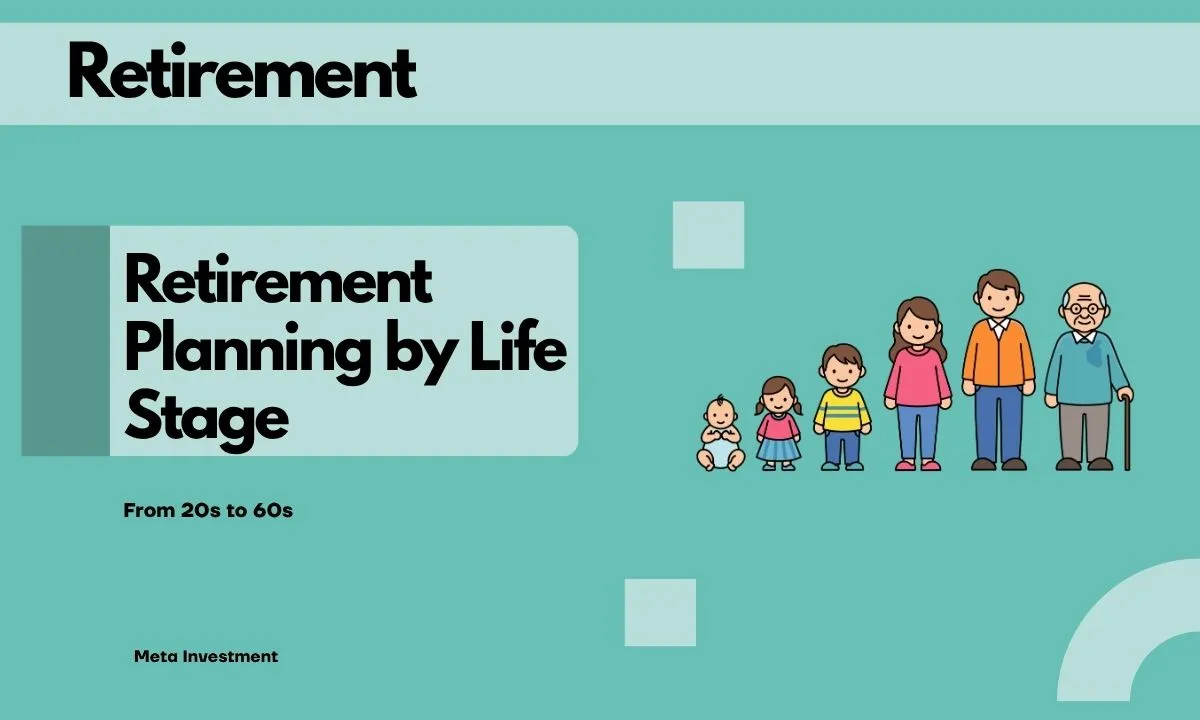
Retirement planning isn’t a one-size-fits-all process. Your strategy should evolve as you progress through different life stages, adjusting for risk tolerance, income levels, and financial goals. Here’s a detailed breakdown of how to plan for retirement at each phase of your career.
1. Early Career (20s to Early 30s): The Foundation Phase
Goal: Start early, maximize compounding, and take calculated risks.
Key Strategies:
✅ Begin Investing ASAP – Even small contributions grow significantly over time due to compounding.
✅ Focus on Growth-Oriented Investments – Since you have a long horizon, allocate a higher portion (70-80%) to equities (stocks, mutual funds, NPS Tier-I equity).
✅ Build an Emergency Fund – Save 6-12 months of expenses to avoid dipping into retirement funds during emergencies.
✅ Take Advantage of Employer Benefits – Maximize EPF contributions and opt for employer-matched retirement plans.
✅ Minimize Debt – Avoid high-interest loans (credit cards, personal loans) that can derail savings.
Recommended Investments:
- EPF/PPF (Safe, tax-free returns)
- NPS (Equity-heavy allocation for long-term growth)
- Equity Mutual Funds (ELSS, Index Funds)
- Term Insurance (Secure dependents without affecting savings)
2. Mid-Career (Late 30s to 50s): The Wealth Accumulation Phase
Goal: Increase savings, balance risk, and prepare for retirement.
Key Strategies:
✅ Boost Retirement Contributions – As income grows, increase investments in EPF, NPS, and mutual funds.
✅ Rebalance Portfolio – Gradually shift from aggressive (equity) to moderate (60% equity, 40% debt) to reduce risk.
✅ Plan for Major Expenses – Account for children’s education, home loans, and healthcare costs.
✅ Consider Tax Efficiency – Use Section 80C (PPF, ELSS), 80CCD(1B) (NPS), and other deductions.
✅ Review Insurance Coverage – Ensure adequate health and life insurance to protect savings.
Recommended Investments:
- NPS (Balanced Auto or Hybrid Funds)
- Debt Mutual Funds & Corporate FDs (Stable returns)
- ULIPs/Pension Plans (If seeking guaranteed income)
- Real Estate (Optional, for diversification)
3. Pre-Retirement (50s to Early 60s): The Transition Phase
Goal: Preserve capital, secure steady income, and minimize risk.
Key Strategies:
✅ Shift to Conservative Investments – Reduce equity exposure to 30-40% and increase debt (FDs, bonds, SCSS).
✅ Estimate Retirement Corpus – Calculate required savings based on inflation-adjusted expenses.
✅ Plan Withdrawal Strategy – Decide between lump-sum vs. annuity (NPS, pension plans).
✅ Clear Outstanding Debts – Pay off home loans, credit cards to reduce financial burden.
✅ Explore Post-Retirement Income – Consider rental income, SWPs (Systematic Withdrawal Plans), or part-time work.
Recommended Investments:
- Senior Citizen Savings Scheme (SCSS) (Safe, high-interest)
- Post Office Monthly Income Scheme (POMIS)
- Immediate Annuity Plans (Guaranteed lifelong income)
- Debt Funds & Corporate Bonds (Low-risk, steady returns)
4. Retirement (60+ Years): The Withdrawal Phase
Goal: Sustain income, manage taxes, and ensure financial security.
Key Strategies:
✅ Follow the 4% Rule – Withdraw only 4-5% annually to prevent outliving savings.
✅ Optimize Tax Efficiency – Use tax-free withdrawals (PPF, EPF) and tax-saving instruments.
✅ Monitor Inflation Impact – Adjust withdrawals to counter rising costs.
✅ Healthcare Planning – Invest in health insurance (Mediclaim, critical illness plans).
✅ Estate Planning – Draft a will, nominate beneficiaries, and consider inheritance tax implications.
Recommended Investments:
- Annuities (Lifetime Payout Options)
- SWP from Mutual Funds (Regular income without selling assets)
- Fixed Deposits (Laddering for liquidity)
- Reverse Mortgage (If property is available)
Final Thoughts
Retirement planning is a lifelong journey. The earlier you start, the more you benefit from compounding. Adjust your strategy at each life stage—taking risks early, balancing mid-career, and securing stability as retirement nears.
Pro Tip: Consult a Meta Investment to customize your plan based on income, goals, and risk appetite.
Next Steps:
Next Reads:
- How to Retire Early in India (FIRE)
- How to Get Monthly Income After Retirement
- Healthcare Costs After 60
Frequently Asked Questions
How should my retirement investments change as I age?
In your 20s-30s, allocate 70-80% to equity for growth. In your late 30s-50s, gradually rebalance toward 60% equity/40% debt. In your 50s-60s, shift to 30-40% equity with more fixed income (FDs, bonds, SCSS) to preserve capital before retirement.
What should I invest in during my 20s for retirement?
Focus on growth: equity mutual funds (ELSS, index funds), NPS Tier-I with a high equity allocation, and EPF/PPF for a safe base. Also build a 6-12 month emergency fund and take term insurance early while premiums are low.
How much retirement risk should I take in my 40s?
A moderate approach works best in your 40s — around 60% equity and 40% debt. This keeps growth potential while starting to protect the corpus you've built, since you have less time to recover from a major market downturn than someone in their 20s.
What should I do for retirement in my 50s and 60s?
Shift to capital preservation: reduce equity to 30-40%, increase debt instruments like SCSS and POMIS, estimate your inflation-adjusted retirement corpus, clear outstanding loans, and decide on a withdrawal strategy (lump sum, annuity, or SWP).
What is the 4% withdrawal rule in retirement?
The 4% rule suggests withdrawing only 4-5% of your retirement corpus annually, which historically allows a corpus to last 25-30 years while keeping pace with inflation, reducing the risk of outliving your savings.
Is it too late to start retirement planning in my 40s or 50s?
No — while starting earlier gives compounding more time to work, starting in your 40s or 50s with disciplined, higher-percentage savings and a realistic corpus target can still build meaningful retirement security.
Read more about
 GuideRetirement Planning in India: Complete 2026 Guide
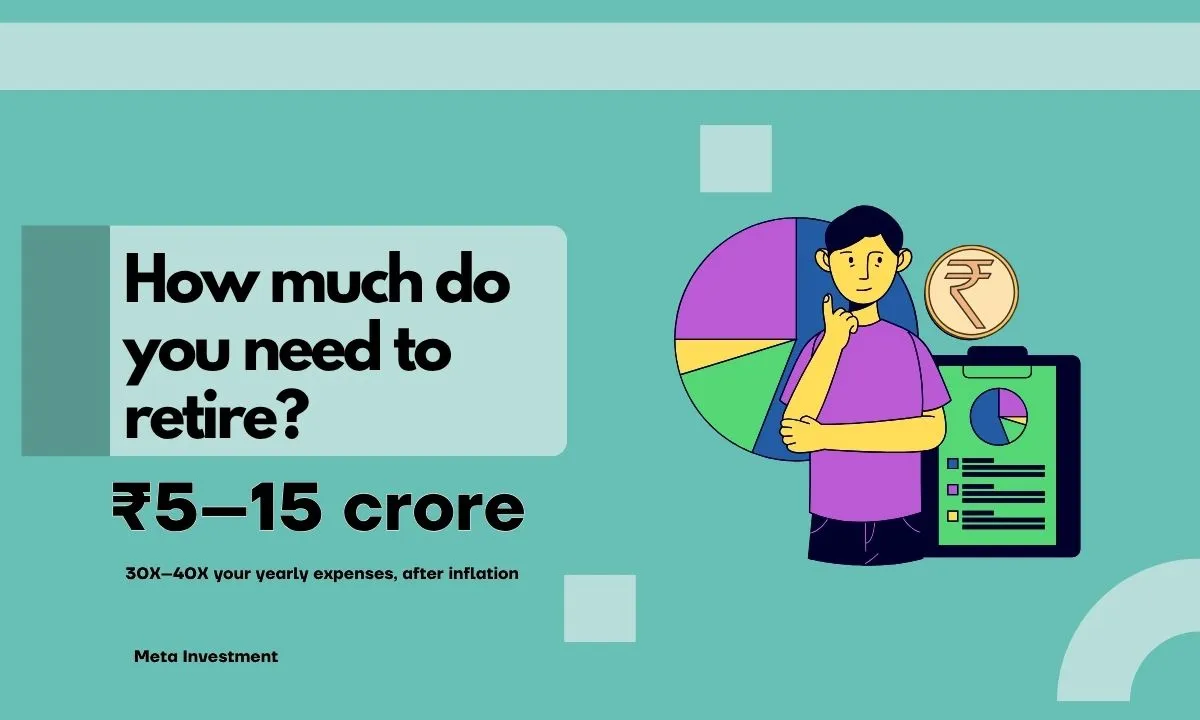 GuideHow Much Money Do You Need to Retire Comfortably in India? (2026 Guide)
 GuideHow to Retire Early in India (FIRE): Your Number, the Gap Years & Health Cover
 GuideHow to Get Monthly Income After Retirement in India: SWP vs SCSS vs Annuity vs FD (2026)
 GuideIs ₹2 Crore Enough to Retire in India? ₹1, ₹2 & ₹5 Crore Compared (2026)
 GuideHealthcare Costs After 60 in India: How Much to Set Aside for Retirement
Related Posts



This communication is intended solely for general educational and informational purposes. The information provided is general in nature and does not take into account the specific financial goals, risk profile, investment horizon, financial circumstances or other requirements of any particular investor. It should not be construed as personalised investment advice or as a recommendation to buy, sell or hold any specific financial product.
NPS is a defined-contribution retirement product regulated by PFRDA; investment outcomes depend on the selected investment option and market performance, and applicable exit/withdrawal conditions should be reviewed.
Distributor Disclosure: Where this content is provided by a distributor/intermediary, any applicable commission, remuneration, affiliation or other material conflict of interest shall be disclosed separately. The availability of a product through the distributor does not by itself imply that the product is suitable for every investor.
No Guarantee: No statement on this page should be interpreted as a promise, assurance or guarantee of returns or investment outcomes.
Meta Investment – Your Investment and Insurance Companion
Mutual fund updates, SIP tips, and what's moving the market. No daily noise — only when there's something worth reading.